

10 Tools You Should Have In Your Motorcycle Tool Kit


10 Motorcycle Tools Worth Having in Your Garage
You don't need a workshop full of expensive equipment to look after your motorcycle. But there's a big difference between having the right tool for the job and spending half an afternoon trying to make do without it.
Whether you ride a road bike, adventure bike or dirt bike, a well-chosen toolkit can make routine maintenance easier, help prevent damaged fasteners and save you plenty of frustration.
The trick isn't buying every tool you can find. It's starting with the essentials and adding specialist equipment as you take on more maintenance yourself.
Here are ten tools worth considering for your home workshop, along with a few practical tips to help you get the most out of them.
1. A Quality Socket and Spanner Set
If you're putting together your first motorcycle toolkit, start here.
You'll use sockets and spanners for everything from removing bodywork and adjusting controls to oil changes and general maintenance.
Most Japanese motorcycles use predominantly metric fasteners, although the sizes and types vary between manufacturers and models.
Six-point sockets are particularly useful for stubborn hex-head fasteners because they provide good contact with the flats of the bolt or nut.
Workshop tip: Always use the correct size socket or spanner. A loose-fitting tool can round off a fastener, turning a simple job into a much bigger one.
A compact set of commonly used sizes is a good starting point. Add individual tools as you discover what your motorcycle requires.
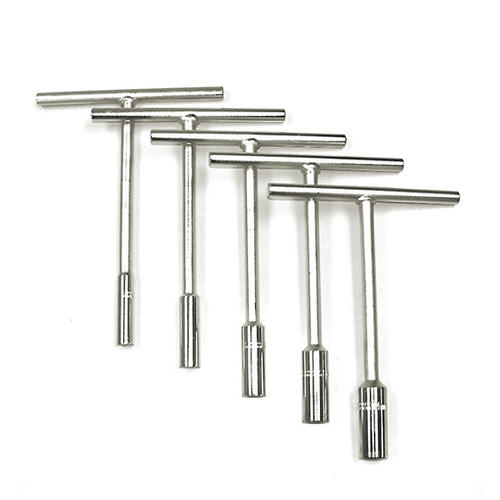
2. T-Handles and Y-Handle Tools
There's a reason you'll find T-handles in so many motorcycle workshops.
They're comfortable to use, quick when removing multiple fasteners and especially handy for regular servicing.
A Y-handle combines several common sizes in one compact tool, making it a useful addition to a portable toolkit.
For riders who remove seats, side covers, bash plates or other components regularly, these tools can save a surprising amount of time.
Workshop tip: Use T-handles for speed and convenience, but don't rely on them for final tightening of fasteners requiring a specified torque.
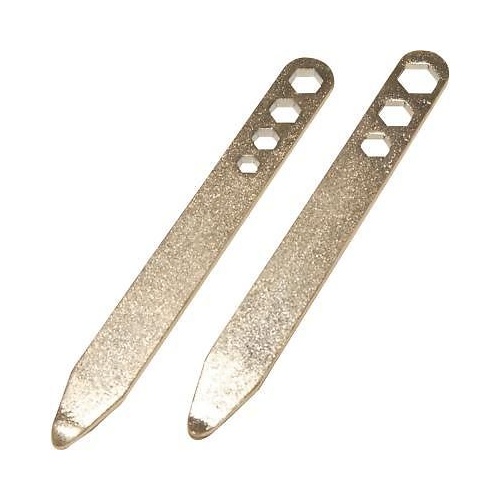
Shop Motorcycle T-Handles & Spanners
3. Hex Keys and Screwdrivers
Motorcycles have plenty of fasteners that won't accept an ordinary socket.
Hex keys, commonly called Allen keys, are used on everything from handlebar clamps and bodywork to various engine and chassis components.
A good set of screwdrivers is just as useful.
Look for a selection of flat-blade and cross-head drivers in different sizes, together with any other drive types your motorcycle requires.
Workshop tip: Some Japanese motorcycles use JIS-style cross-head screws, which can be damaged by a poorly fitting Phillips screwdriver. Use a correctly fitting driver rather than forcing the wrong one.
For hex fasteners, insert the tool fully before applying force. Ball-end hex keys are useful for access at an angle, but a straight, fully engaged hex tip is preferable for higher-torque applications.
A compact motorcycle tool kit can be a convenient way to cover many of these everyday jobs.
4. A Reliable Tyre Pressure Gauge
This is one tool we'd recommend to almost every rider.
Tyre pressure affects handling, braking performance, tyre wear and how your motorcycle feels on the road or trail.
An accurate pressure gauge makes it easy to check your tyres before heading out.
Digital and analogue gauges can both work well, provided they're accurate and suited to the pressure range you're measuring.
Workshop tip: Check tyre pressures when the tyres are cold, before riding or after they've had sufficient time to cool.
For normal road use, follow the motorcycle manufacturer's recommended cold pressures, allowing for load and any relevant tyre manufacturer's guidance. Off-road and track applications may have different requirements.
Don't let air out of a hot road tyre simply because its pressure has increased during riding. That's normal.
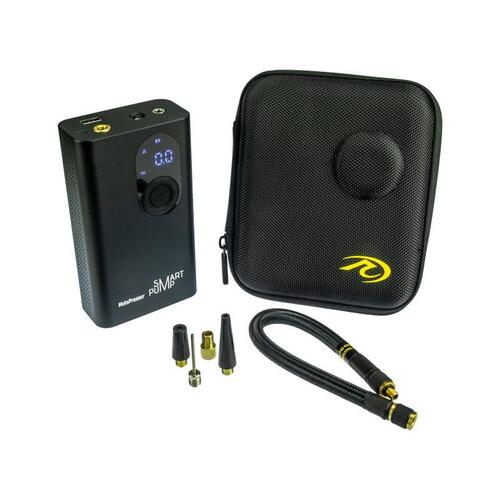
Shop Tyre Pressure Gauges & Pumps
5. A Torque Wrench
Not every motorcycle fastener should be tightened by feel.
Overtightening can strip threads, damage components or stretch fasteners. Undertightening can allow parts to loosen.
A torque wrench lets you tighten fasteners to the manufacturer's specified setting.
This is particularly important for components such as axle fasteners, brake caliper mounting bolts and other critical assemblies.
Workshop tip: Make sure the torque wrench covers the required torque range. A large wrench designed for axle nuts may not be suitable for smaller engine-cover fasteners.
Always consult your motorcycle's service manual for the correct procedure and specification. Tightening sequences, lubrication and thread-locking requirements can affect the result.
For adjustable click-type torque wrenches, follow the manufacturer's instructions for storage and calibration.
6. A Compact Motorcycle Tool Kit
Your garage toolkit and your on-bike toolkit serve different purposes.
At home, you can keep a larger selection of tools. Out on the road or trail, you want something compact that covers the most likely problems.
A useful portable kit might include sockets, hex keys, screwdrivers, pliers and a small spanner or adjustable wrench.
The best kit isn't necessarily the one with the most pieces. It's the one containing tools that actually fit your bike.
Workshop tip: Before your next ride, use your portable toolkit to practise accessing basic service points on your motorcycle.
Check that you have what you need to remove relevant covers, access the battery where applicable and make simple permitted adjustments.
It's much better to discover a missing tool in the garage than on the side of the road.
7. A Chain Breaker and Riveting Tool
If you ride a chain-driven motorcycle and intend to replace your own chains, a suitable chain tool is worth considering.
Chain breakers are designed to push chain pins out, allowing the chain to be separated or shortened.
However, removing a chain and correctly installing a replacement aren't necessarily the same job.
Some motorcycle chains use rivet-type connecting links that require a compatible riveting tool. Other chains use manufacturer-approved clip-type links.
Workshop tip: Check the chain size, tool compatibility and connecting-link type before starting.
With many rivet-type chains, the old pin heads must be ground down before pressing the pins out, reducing the risk of damaging the tool.
When fitting the new chain, follow the chain manufacturer's instructions for joining-link plate position, riveting dimensions and final inspection.
An incorrectly joined chain can fail while riding, so this is a job where the correct equipment and procedure really matter.
Shop Motorcycle Chain Breakers & Joiners
8. A Motorcycle Stand
A suitable stand makes many maintenance jobs easier.
Depending on your motorcycle, a rear paddock stand, centre stand or purpose-built off-road lift stand can provide improved access for cleaning, inspection and servicing.
A paddock stand can be particularly useful for road motorcycles when carrying out chain maintenance or cleaning the rear wheel.
For dirt bikes, an appropriate lift stand can make wheel removal and other maintenance much easier.
Workshop tip: Choose a stand designed for your motorcycle's weight and lifting points.
Always work on a stable, level surface and make sure the motorcycle is properly supported before beginning.
Not all stands safely support a motorcycle when a wheel is removed, so check the stand's intended use.
Avoid improvised supports that could allow the bike to fall.
9. A Battery Charger or Maintainer
If your motorcycle spends long periods parked, an appropriate battery charger or maintainer can be a worthwhile investment.
Motorcycle batteries gradually lose charge while sitting unused, and some motorcycles also have small electrical loads that continue drawing power when switched off.
Repeatedly allowing a battery to become deeply discharged can shorten its service life.
A modern automatic maintainer can help keep a compatible battery charged during extended storage.
Workshop tip: Check the battery type before connecting a charger.
Conventional lead-acid, AGM and lithium motorcycle batteries don't all have identical charging requirements.
Use a charger specifically approved for your battery chemistry and follow both the charger and battery manufacturers' instructions.
A basic charger shouldn't automatically be left connected indefinitely unless it's designed and approved for maintenance charging.
Shop Motorcycle Battery Chargers
10. The Correct Service Information for Your Motorcycle
This last one isn't technically a tool, but we'd argue it's one of the most valuable things to have in your garage.
Your owner's manual is a starting point for routine maintenance, while a proper workshop service manual provides the detailed specifications and procedures needed for more involved work.
It can tell you important information such as:
-
Recommended service intervals
-
Tightening torque specifications
-
Chain adjustment procedures
-
Fluid specifications and capacities
-
Component inspection limits
-
Correct dismantling and reassembly procedures
Workshop tip: Don't assume specifications from a similar model or an online video apply to your motorcycle.
Even bikes from the same manufacturer can have different procedures, fasteners and tightening requirements.
Check the information for your exact make, model and year.
A Few Specialist Tools Worth Adding Later
Once you've covered the basics, you can start building a toolkit around the maintenance you actually do.
For example, riders working on spoked wheels may benefit from spoke spanners and specialist tension-measuring tools.
Those carrying out their own oil changes might need a model-specific oil filter wrench.
If you're doing more involved engine, suspension or electrical work, additional specialist tools may be required.
There's no need to buy everything at once.
Start with the tools you'll use regularly, and invest in the correct equipment as your skills and maintenance jobs expand.
Build a Toolkit That Suits Your Motorcycle
A good motorcycle toolkit doesn't have to be expensive or complicated.
A handful of properly chosen tools can make everyday servicing easier, reduce the chance of damaging components and help you look after your bike with more confidence.
Whether you're doing a quick adjustment before a weekend ride or taking on a larger maintenance job in the shed, having the right equipment makes all the difference.
At Firestorm Motorcycles, we work on a wide variety of motorcycles in our workshop and know the value of tools that do the job properly.
If you're putting together your first toolkit or adding to an existing collection, take a look at our range of motorcycle tools and workshop equipment.
Browse Motorcycle Tools at Firestorm Motorcycles