


Originally published 25 July 2024 · Updated 18 October 2026
Could the future of motorcycling run on hydrogen rather than petrol or electricity? Kawasaki's hydrogen-powered Ninja prototype offers a fascinating glimpse of one possible direction.
On 20 July 2024, Kawasaki demonstrated its experimental hydrogen internal combustion motorcycle at Japan's Suzuka Circuit. Based on technology from the legendary supercharged Ninja H2, the prototype combines familiar motorcycle engineering with an alternative fuel.
Kawasaki's Hydrogen Ninja Makes History
Kawasaki described the demonstration as the world's first public run of a hydrogen internal combustion motorcycle by a mass-production motorcycle manufacturer.
Research began in March 2023, with motorcycle testing taking place in 2024. Unlike an electric motorcycle, which uses a battery and electric motor, Kawasaki's prototype burns hydrogen inside a conventional-style combustion engine.
The result is an experimental motorcycle designed to retain the sound, vibration and throttle response associated with internal combustion engines while exploring a different approach to fuel.
Five Interesting Technical Details
1. A Supercharged Ninja H2 Engine
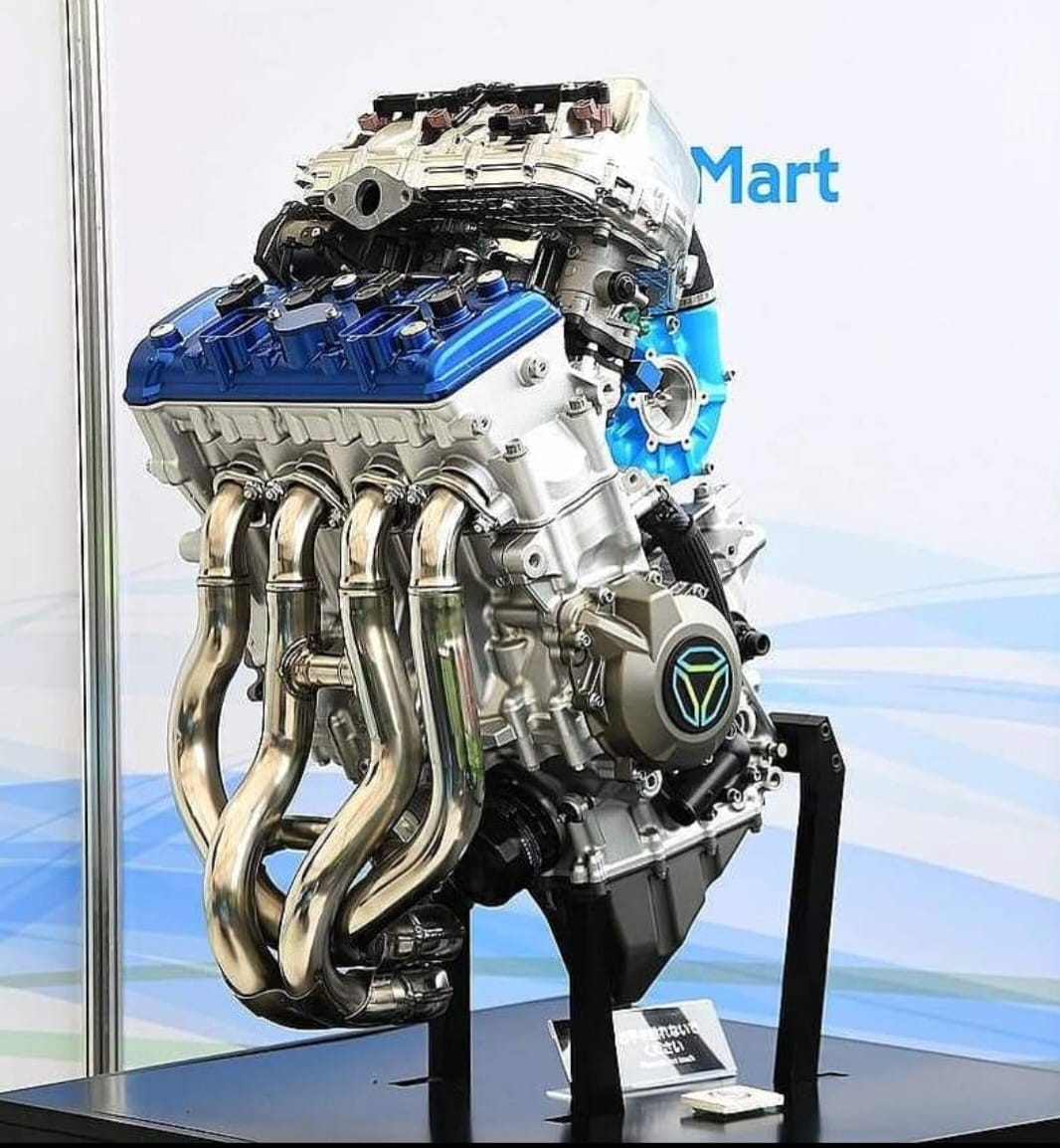
The prototype uses an engine derived from the 998cc supercharged inline-four fitted to the production Kawasaki Ninja H2.
Rather than developing an entirely new engine concept, Kawasaki adapted this existing high-performance platform for hydrogen combustion.
2. Direct Hydrogen Fuel Injection
The engine has been modified to inject hydrogen directly into its cylinders. This is fundamentally different from a hydrogen fuel-cell vehicle, which converts hydrogen into electricity to drive an electric motor.
Direct injection is an important part of managing hydrogen combustion, although the technology introduces its own engineering challenges.
3. Special Hydrogen Storage Canisters
Hydrogen needs specialised onboard storage and fuel-delivery equipment. Kawasaki designed the prototype's chassis to accommodate hydrogen canisters and the associated fuel supply system.
This is one reason the experimental motorcycle looks considerably bulkier than a standard Ninja H2.
4. Familiar Engine Sound and Character
One of Kawasaki's goals is to preserve the sensations that riders enjoy from combustion engines.
Unlike the comparatively quiet operation of an electric motorcycle, a hydrogen combustion engine still produces mechanical sound and exhaust pulses.
5. Lower Carbon Emissions at the Exhaust
Hydrogen contains no carbon, so burning it does not produce the same carbon dioxide emissions as petrol combustion.
However, hydrogen engines are not automatically pollution-free. They can produce nitrogen oxides, and their overall environmental impact depends heavily on how the hydrogen is produced, stored and transported.
Hydrogen vs Electric Motorcycles
Both technologies offer alternatives to conventional petrol motorcycles, but they face different challenges.
- Hydrogen combustion: Could preserve familiar engine characteristics and allow relatively quick refuelling, but requires specialised fuel storage and a hydrogen supply network.
- Battery electric: Provides efficient, responsive electric power with no exhaust emissions, but charging access, battery weight and practical range remain considerations.
Battery-electric technology generally uses energy more efficiently than producing hydrogen, distributing it and then burning it in an engine. Hydrogen's potential advantage lies in preserving combustion-engine characteristics and potentially reducing refuelling time.
Will Kawasaki Sell a Hydrogen Ninja?
When Kawasaki announced the prototype in 2024, it was targeting the early 2030s as a possible timeframe for practical hydrogen motorcycle technology. Commercial availability was not guaranteed and would depend on infrastructure and regulations.
This is an important distinction: the hydrogen Ninja was a research prototype, not a production motorcycle available for customers to order.
Riders interested in the conventional supercharged machine that inspired the project can explore Firestorm's Kawasaki Ninja H2 parts and accessories. These are for the listed production models, not the experimental hydrogen motorcycle.
What Future Would You Choose?
Kawasaki's hydrogen-powered Ninja demonstrates that the future of motorcycles may involve more than one technology.
Electric bikes offer efficiency and instant torque, while hydrogen combustion could preserve more of the traditional motorcycle experience. Both still face practical challenges.
What would you prefer to ride: a hydrogen-powered motorcycle that sounds and feels like a conventional bike, or an electric motorcycle with instant torque and quiet operation?
Share your thoughts in the comments below.
Technical information and original announcement: Kawasaki Motors.