


Originally published 5 July 2024 · Updated 19 October 2026
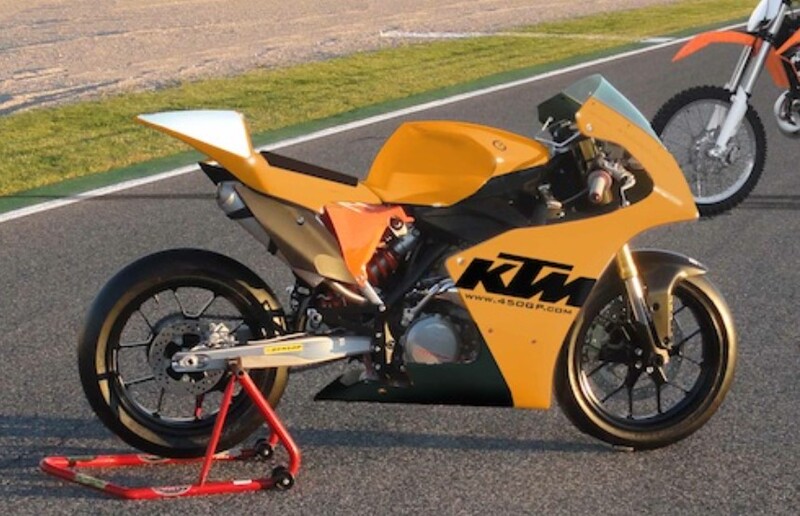
Take a KTM 250 SX two-stroke motocross bike, replace its off-road chassis setup with racing components, and wrap it in aerodynamic Grand Prix-style bodywork. The result is one of the most interesting motocross-to-road-race conversions we've seen.
Created by Spanish specialist BeOn Automotive, the KTM SX250GP combines the character of a high-performance two-stroke dirt bike with the aggressive appearance of a purpose-built circuit racer.
From Motocross Bike to Road Racer
BeOn Automotive became known for developing road-racing conversions based on motocross and supermoto motorcycles, particularly its four-stroke 450GP projects.
The KTM SX250GP took a different direction. Instead of using a four-stroke engine, BeOn chose the lively 250cc two-stroke engine from KTM's SX motocross range.
Introduced around 2010, the conversion was intended to capture the excitement of traditional two-stroke Grand Prix racing in a compact, lightweight machine.
Unlike an ordinary motocross bike, a circuit racer needs precise steering, strong brakes, appropriate gearing and tyres designed for paved surfaces. BeOn developed the SX250GP around those different demands.

Five Standout Features of the KTM SX250GP
1. KTM 250 SX Two-Stroke Power
The heart of the SX250GP is KTM's liquid-cooled, single-cylinder 250cc two-stroke engine.
This powerplant was originally designed for motocross, where responsive acceleration and a strong power-to-weight ratio are especially important.
Contemporary reporting on BeOn's conversion quoted more than 50 horsepower, giving the lightweight machine an exciting performance potential.
Two-stroke expansion chamber design plays an important part in how these engines deliver their power. Firestorm stocks two-stroke expansion chambers for a wide range of supported off-road motorcycles.
2. Lightweight GP-Style Construction
One of the most appealing aspects of the BeOn conversion is its compact, lightweight appearance.
Period coverage described the SX250GP as weighing a little over 100 kg. Combined with its lively two-stroke engine, that creates an impressive power-to-weight combination.
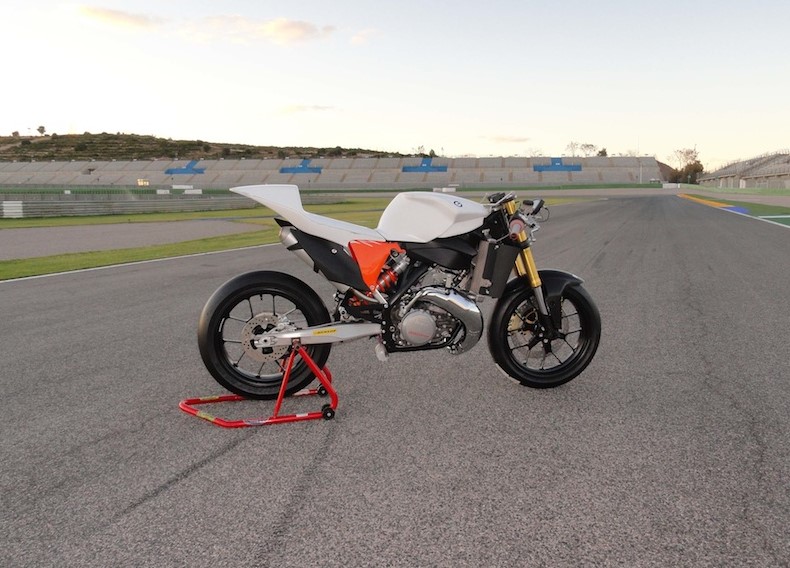
The race bodywork gives the KTM a completely different silhouette from the original motocross machine, including a full front fairing, sculpted fuel-tank area and streamlined rear section.
3. Road-Racing Suspension
Motocross suspension is designed to absorb jumps, landings and rough terrain. Road-racing suspension must instead provide stability, steering precision and predictable tyre contact on smooth tarmac.
The BeOn conversion was reported with a 43 mm upside-down front fork, part of a chassis package intended for circuit use.
Anyone modifying a production motorcycle should treat suspension setup as an integrated system, considering spring rates, damping, geometry and intended riding conditions.
4. A 320 mm Front Brake Disc
Braking requirements are dramatically different between motocross and circuit racing.
On a road-racing circuit, motorcycles regularly decelerate hard from high speeds, placing considerable demands on the brakes.
BeOn's SX250GP conversion was reported with a 320 mm front brake disc, substantially larger than many conventional motocross front rotors.
For routine maintenance or performance upgrades, explore Firestorm's motorcycle brake pads and discs. Rotor diameter, caliper mounting and brake-line compatibility must always be checked before fitting different components.
5. Road Wheels, Tyres and Gearing
A motocross motorcycle's wheels and knobby tyres are designed for dirt, whereas a road racer requires tyres suitable for paved circuits.
Changing wheel sizes also affects steering geometry, ride height and gearing.
The final-drive ratio needs to suit the engine's performance and the speeds expected on the circuit, rather than the slower, constantly changing conditions of motocross.
Firestorm's chains and sprockets category is useful for riders maintaining their existing drivetrain or researching gearing options for supported motorcycle models.
Why Convert a Motocross Bike for Road Racing?
There is something appealing about taking a proven motocross engine and placing it in a lightweight circuit-racing package.
A two-stroke engine offers distinctive throttle response, a compact design and a characteristic sound that many motorcycle enthusiasts appreciate.
Compared with developing an entirely new racing motorcycle, using an existing production engine also provides an established mechanical starting point.
However, a successful conversion requires much more than new bodywork. Brakes, suspension, steering geometry, cooling and drivetrain components must all be suitable for the motorcycle's intended use.
Maintaining Your KTM 250 SX
While BeOn's GP conversion is a specialist project, the production KTM 250 SX remains a popular platform for riders who enjoy two-stroke motocross.
Routine maintenance includes checking piston and ring condition, servicing the air filter, inspecting the clutch and monitoring chain and sprocket wear.
Firestorm's KTM 250 SX parts and accessories finder helps owners locate parts for their motorcycle after selecting the appropriate model year.
You can also explore our guide to rebuilding a two-stroke dirt bike top end or learn about inspecting and replacing motorcycle sprockets.
Always confirm model-year compatibility. Parts intended for a standard KTM 250 SX should not automatically be assumed suitable for a modified GP racer.
A Two-Stroke Tribute to Grand Prix Racing
BeOn Automotive's KTM SX250GP is a reminder of how entertaining a lightweight, high-performance two-stroke road racer can be.
Its combination of KTM motocross power, circuit suspension, oversized front brakes and Grand Prix-inspired bodywork creates a distinctive machine.
It is the kind of motorcycle that makes two-stroke enthusiasts wish they could hear it accelerating down the main straight.
Original conversion: BeOn Automotive. Historical coverage and period specifications: Motorpasión Moto (December 2010).